Powder coating creates a colored and tactile exterior on stainless steel bottles and tumblers. It is commonly selected for products that need a durable matte, glossy, textured or metallic finish.The final result depends on the bottle shape, surface preparation, powder application and curing. Approving the finish on the actual bottle model helps reduce differences between the sample and bulk production.
Request a QuoteWhat Is Powder Coating on a Tumbler?
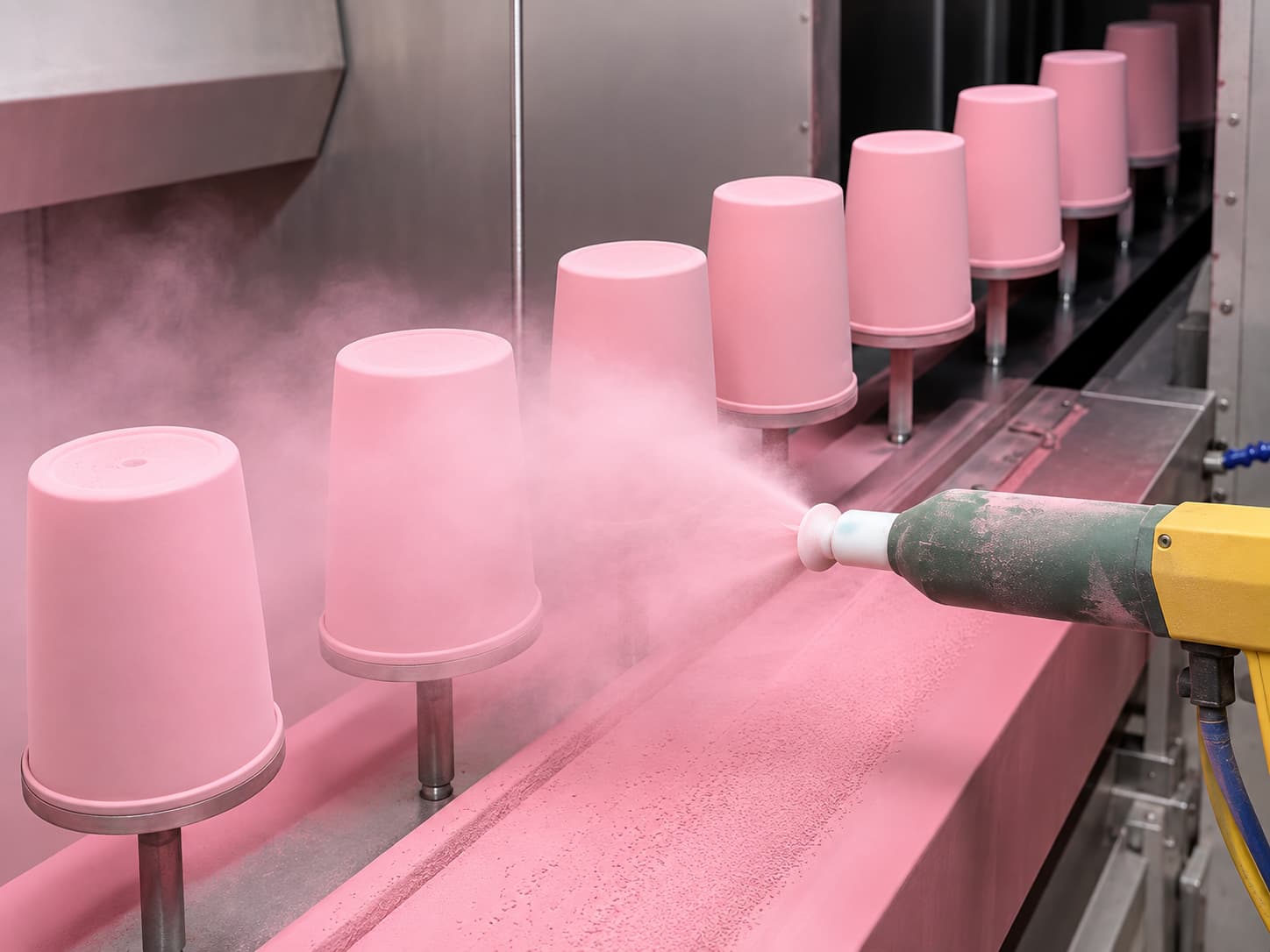
Powder coating is a dry finishing process used on the metal exterior of stainless steel bottles and tumblers. Electrically charged powder is attracted to the grounded bottle body, then heated until it melts and cures into a continuous coating.
The coating mainly determines the bottle’s exterior color, gloss and tactile feel. It can create matte, glossy or textured surfaces and can also serve as a base for compatible branding methods. Powder coating changes the outside finish of the bottle, not the vacuum-insulation structure inside.
Powder coating improves the bottle’s exterior finish and resistance to routine handling, but it does not make the surface completely scratch-proof or automatically dishwasher safe.
Powder Coating Finishes and Customization Options
The selected finish affects both the appearance and the tactile feel of the bottle. Buyers should confirm the finish direction before approving the final coated sample
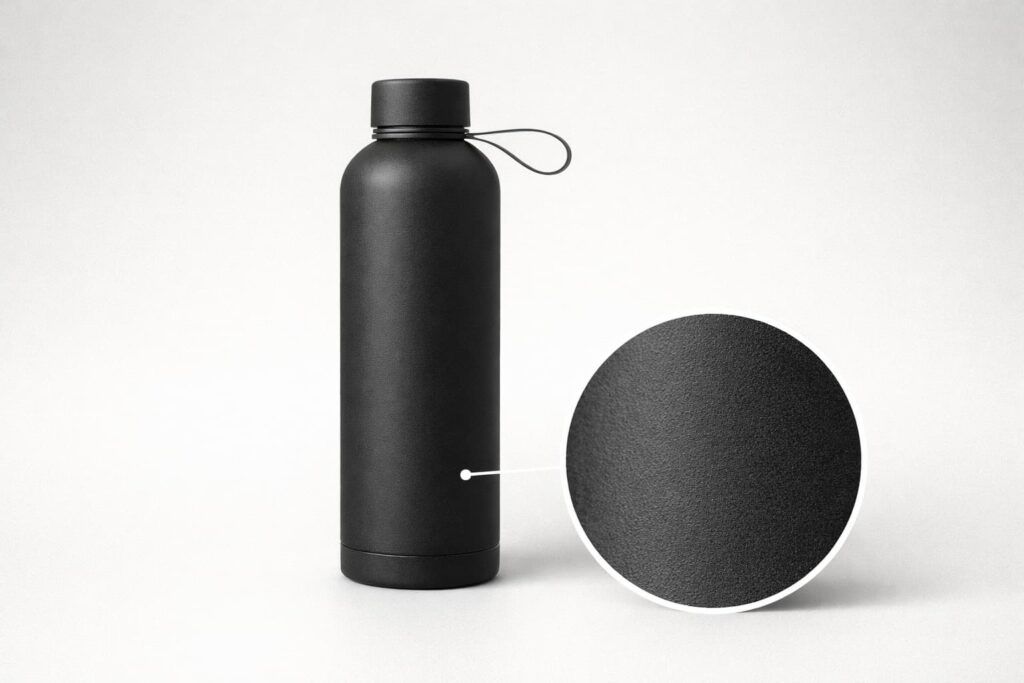
Matte
Low-gloss, restrained appearance for everyday drinkware.
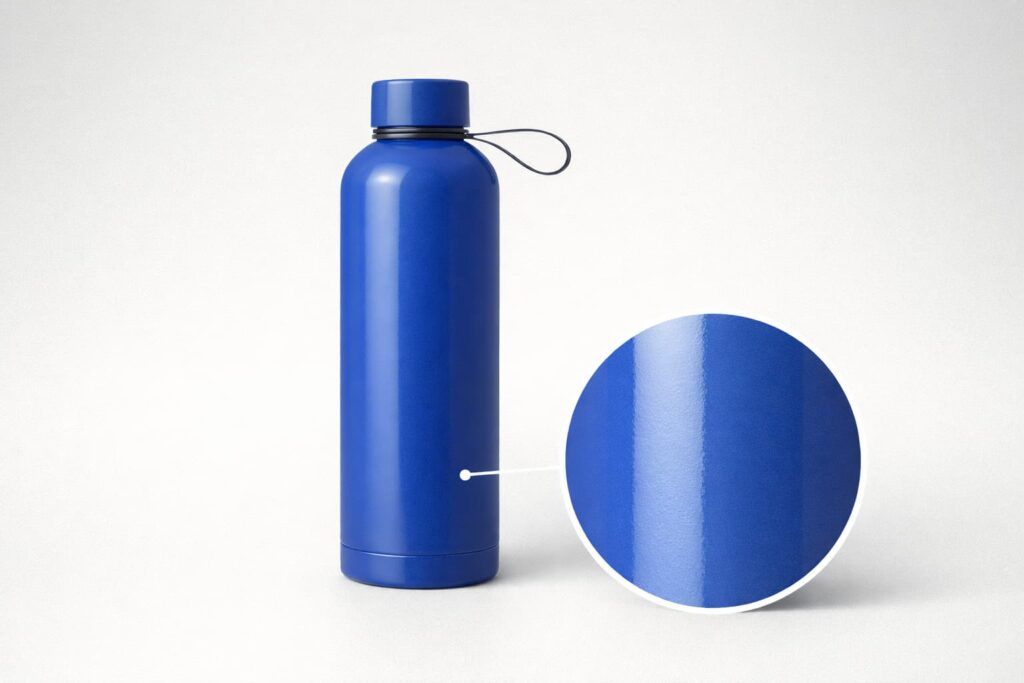
Glossy
Brighter color presentation with a smoother visual effect.
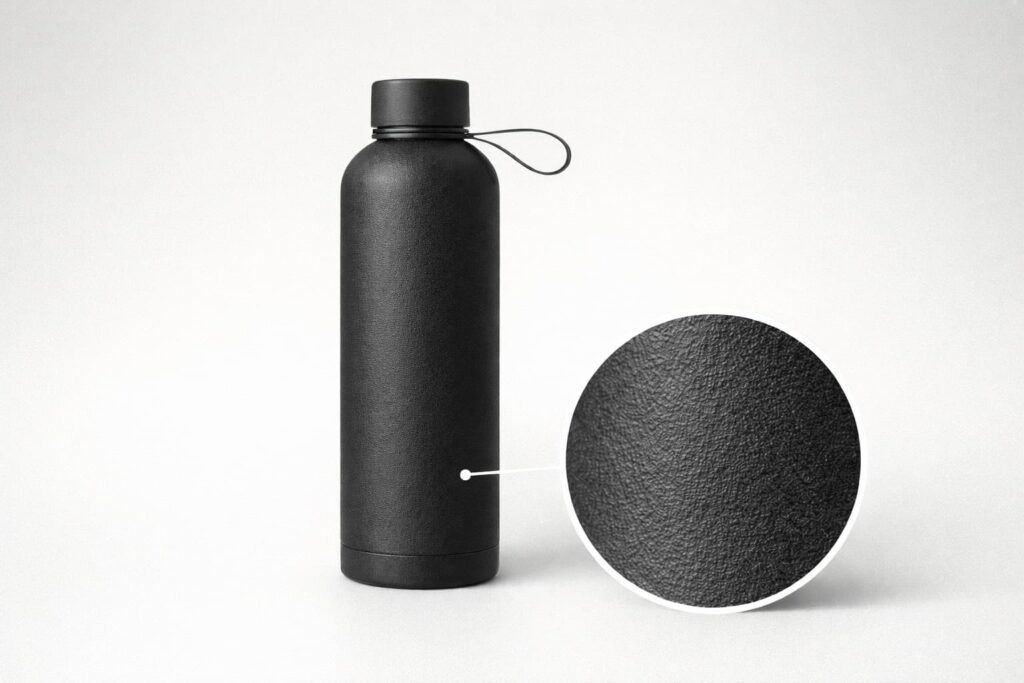
Fine Textured
Tactile surface that improves grip and makes minor surface variations less noticeable.
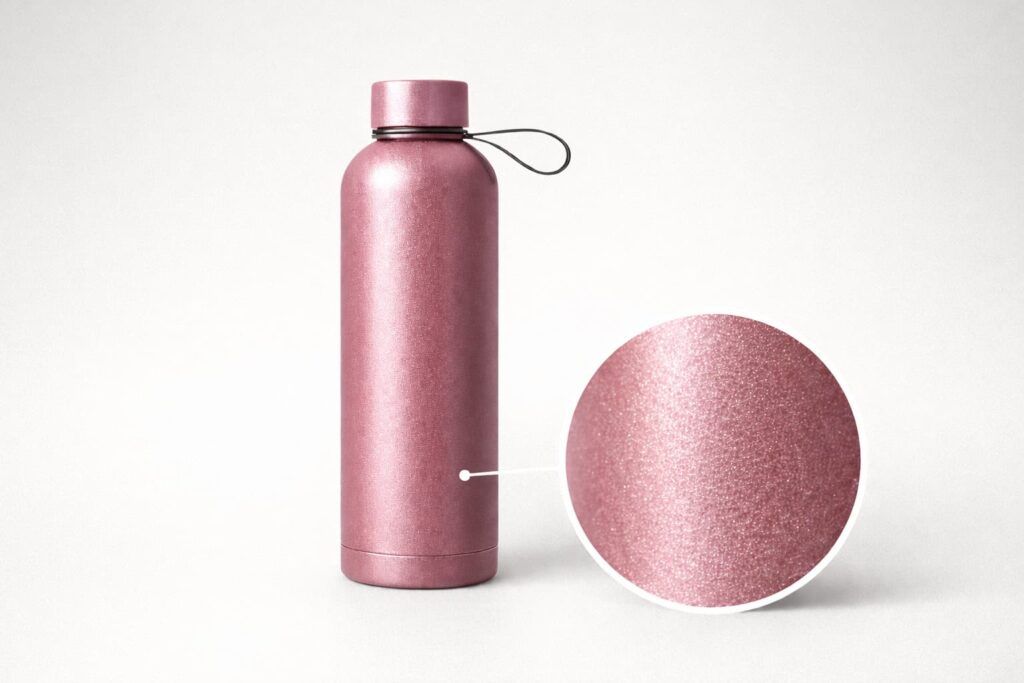
Metallic
Subtle reflective effect that changes under different lighting conditions.
How Powder Particle Size Affects Texture
Powder particle size is one factor that influences the final surface texture.
We use D50, the median powder particle size, as a production reference when developing different finish effects.
See How Powder Coating Is Applied to Stainless Steel Drinkware
How the Powder Coating Process Works
Surface Preparation
Oil, dust and other residues are removed so that the powder can bond to a clean and dry surface.
Masking and Powder Application
Areas that should remain uncoated are masked. Charged powder is then applied to the grounded stainless steel body.
Heat Curing
The applied powder melts and cures into a continuous coating. Suitable time and metal temperature are required for proper film formation.
Inspection
The finished bottles are checked for color, texture, coverage, masking boundaries and visible surface defects.
How Durable Is Powder Coating on Stainless Steel Bottles?
Powder coating is commonly selected when buyers want a durable exterior finish, but actual performance still depends on the complete coating process and the way the bottle will be used.
What Affects Durability?
Surface cleanliness, coating coverage, bottle geometry and curing conditions all influence adhesion and wear resistance.
What Can Still Damage It?
Sharp objects, hard impacts and repeated friction can still scratch or chip the coating. Edges and high-contact areas generally require more attention.
How Can It Be Checked?
Depending on the project, coating quality can be evaluated through visual inspection, adhesion testing, film-thickness checks, abrasion testing and dishwasher testing.
Frequently Asked Questions About Powder-Coated Bottles
Is powder coating suitable for stainless steel bottles?Yes. Powder coating is commonly used on stainless steel bottle exteriors when the project requires color, texture and resistance to routine handling. Suitability still depends on the bottle shape, finish requirement, intended use and required testing.
Is a powder-coated tumbler scratch-proof?No. Powder coating can provide good resistance to routine abrasion, but sharp objects, hard impacts and repeated friction can still scratch or chip the surface. Edges and high-contact areas generally require more attention.
Are powder-coated bottles dishwasher safe?Not automatically. Dishwasher performance depends on the powder system, surface preparation, curing and washing conditions. If dishwasher use is required, the washing program, detergent, temperature, cycle count and acceptance criteria should be agreed before production.
Can logos be added to powder-coated bottles?Yes. Powder-coated surfaces can be combined with laser engraving, silkscreen printing or UV printing. The suitable method depends on the artwork, surface texture, bottle curvature and expected wear conditions.
What is the MOQ for a custom powder-coated color?The MOQ for a custom powder-coated bottle body color is 1,000 pieces per color. If an order includes several custom colors, each color needs to meet the corresponding minimum quantity. Orders using available stock colors with logo customization may follow a different MOQ.
Can bottles with handles or recessed areas be powder coated?Yes, but fixed handles, recessed joints and narrow corners can be more difficult to coat evenly because of the Faraday cage effect. Buyers should inspect the inside of handles, connection points, bottle shoulders and bottom transitions on the actual sample before bulk production.
How should a custom powder-coated color be approved?A Pantone reference or physical color sample can be used as the initial target. However, a Pantone number does not fully define gloss, texture or how the color will appear on the finished bottle. The actual coated bottle sample should be used as the final approval reference before bulk production.
What information should I provide before requesting a sample or quotation?Provide the bottle model and capacity, estimated order quantity and quantity per color, target color and surface texture, logo artwork and position, intended use and washing requirements, required coating tests, sample approval reference, and any packaging or surface-protection requirements.
Related Guides for Surface Finishing Projects
Powder coating is commonly selected when buyers want a durable exterior finish, but actual performance still depends on the complete coating process and the way the bottle will be used.
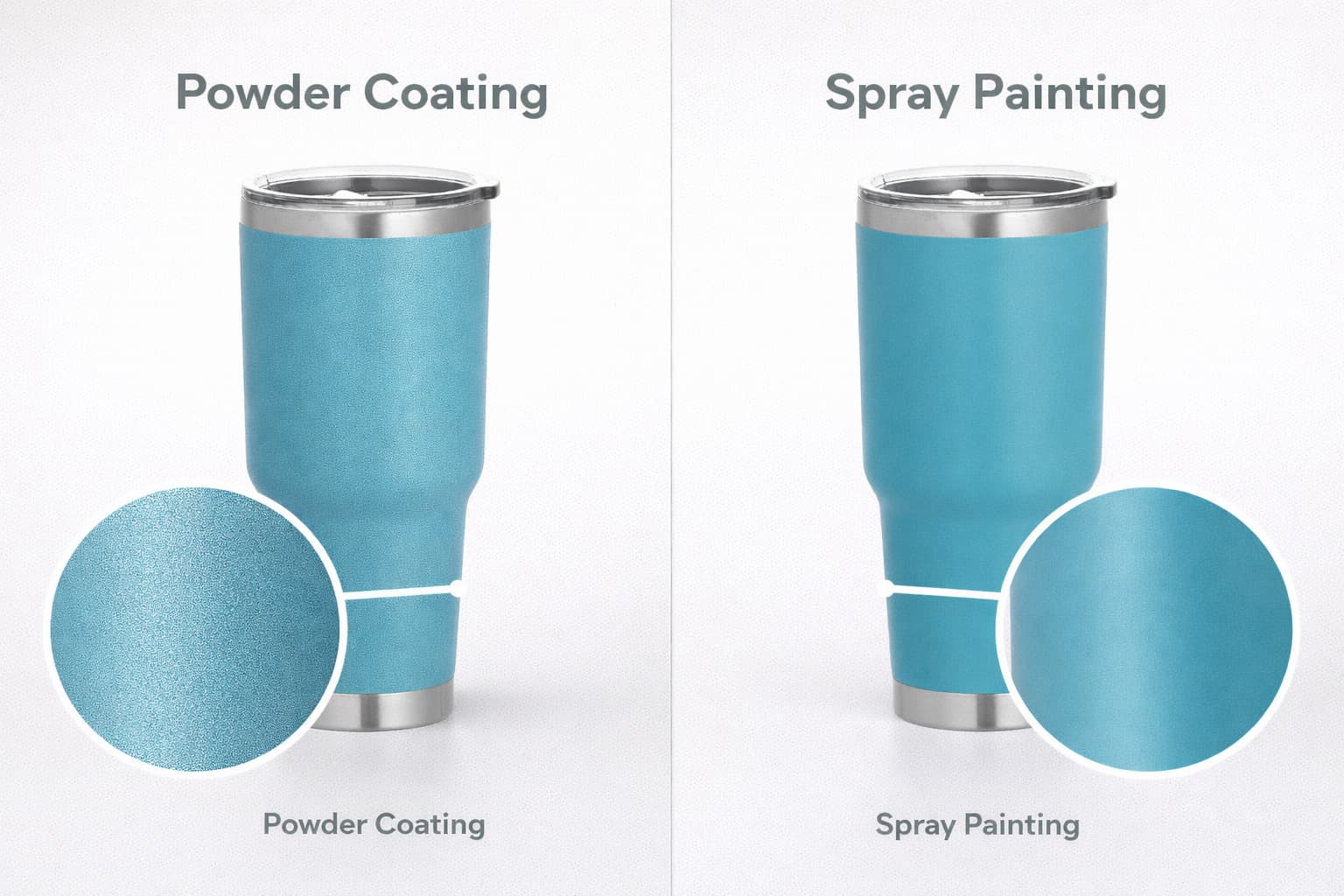
Powder Coating vs Spray Painting for Tumblers: Which One Should You Choose?
Learn the pros, cons, durability, and factory tips for spray painted vs powder coated tumblers. Find the...- 2025-12-10
- FlaskWholesale